Monday, June 27, 2011

Berlin, Germany

Berlin, Germany

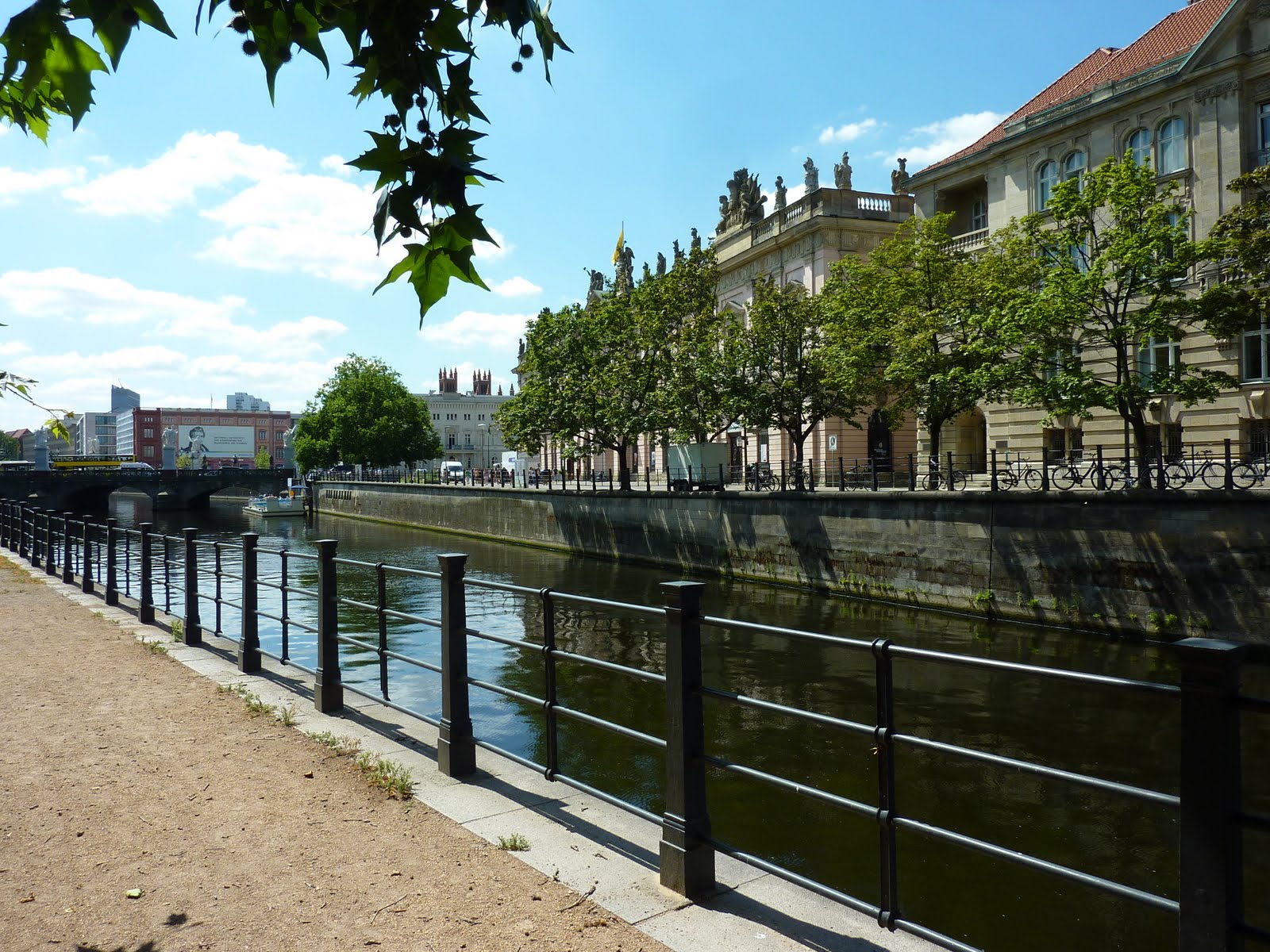
No other city has dominated a century like Berlin dominated the 20th.  The city was an angst-ridden center for avant-garde art, music, and literature even before the Second World War.  The city is likely the center of culture for the entire continent, and for the American, it's found as an unthinkable melange of our most revered cities like New York, San Francisco, and Portland.

The post war years left Berlin isolated from it's country, as well as from the economic attention received by other western cities throughout Europe and America.  As a result, the twenty years since the fall of the wall brought a pent up cultural explosion no other city has experienced.  There are acres of graffiti melded through cafe lined streets of Vietnamese, Turkish, Indian, and American.  The Berliners have an obsession with world cuisine, and it plays out amid the city's uniquely satisfied inhabitants who live among the many yellow lit avenues.

Outside my residence, the youth of the city gather outside a theatre in droves to discuss political topics, with their vintage shoulder bags, rolled sleeves and cuffs, slim slacks, and bicycle in toe.  I know the tourists are here, but I can't seem to find them.  I stroll the zig-zagging streets slower than in any other city, stumble upon a book fair, and sit back in one of the many perfectly placed green spaces.

150 museums dot the bustling streets, culminating with the UNESCO noted Museum Island that houses the most unique antiquities I've seen.  But behind the institutional facade lays a dark underbelly that always pervasively defined Berlin.  The art squats, cabaret shows, alternative galleries, and punk clubs all denote a city historically in conflict with itself and the world surrounding.


There is an unabated ruthlessness to the culture of Berlin, and being the capital of the EU's powerhouse economy, the city is sure to never disappear again from proper acknowledgement.


TIP OF THE DAY:  Don't go on tour group organized pub crawls!  They offer minimal insight into the culture of a city.  This pub crawl last night was frequented by a group of Aussies for the third night in a row, who use the tour as an avenue to pick up drunk girls--G'day to you mate. 


READING:  The World as Will and Representation, Arthur Schopenhauer


LISTENING:  More Wilco


Saturday, June 25, 2011

Budapest, Hungary--Part 2

Budapest, Hungary--Part 2

Some interesting facts about Hungarians:

1)  Put paprika on everything
2)  Love American style shopping malls
3)  Distrust everyone but the Polish (why, who knows?)
4)  Women under 30 are quite striking, despite drinking, smoking, and eating in excess
5)  Women over 30 are the opposite, due to drinking, smoking, and eating in excess


Budapest is quite the city--visually unique, gritty, vibrant, and livable.  The transportation system is amazingly comprehensive, and the impressive Danube river that splits the city in half makes knowing your location unusually easy.  The city is quite decentralized and while it has some reasonably good sights--museums, castle, market hall, and iconic bridges--the sole medal winning sight are the Turkish baths.

The bath house I visited, the Szechenyi, is the largest and most iconic. A quick note on Hungarian swimwear:  Men and women will wear anything.  I saw some of the wildest bikinis, speedos, and overall ensembles I've ever encountered.  There were 80-year-olds with this summer's new two piece, father and son with matching turquoise speedos, and linebacker sized girls with swimsuits I can only describe as resembling a T-bone steak.  Briefs are the Hungarian staple, and tourists are easy to spot, as having the longer shorts.

There were at least ten pools, and each one had different temperatures.  The lap bath was the coldest, required a swim cap to enter, and most reminiscent of pools back in the States.  Bookending the lap area at one side was the 88 degree fun bath, with jets, fountains, and vortexes.  The other end held the hottest outdoor bath, the 99 degree lounging bath, with grizzled men playing chess and levels of stairs for laying.  Inside the complex was a maze

Budapest is proving to be the most difficult city to find a decent meal.  Surely, there is great food here, but I'm not finding it.  Also, I typically use dinner as my only sit-down meal of the day, and this city does not specialize in street food.  So, disappointingly, I ate at McDonald's today.  Some interesting notes about Hungarian McDonald's:

1)  Ketchup is always sold separately and in little containers
2)  A sandwich made of chicken nuggets
3)  There's a breakfast sandwich that's just a 1/4 lb. burger with an egg loaf on it
4)  The McFarm burger, which I believe is made of pork
5)  There are no numbered meals, and you order your meal in stages, with each stage containing healthy options.


Outside of that, Budapest has the second oldest metro in the world, the House of Terror is the best private museum I've visited, and there's very little architecture to take pictures of.  It's a beautiful city in its own distinctive way, and I feel like there's no place like Budapest on this earth.

GRAFFITI AND YOU:  On a wall highlighting the Hungarian struggle against communism in the 80's, 1985 is defined by this man.


LISTENING:


Friday, June 24, 2011

Budapest, Hungary

Budapest, Hungary

Chapter 2

Five Words:  Hungarian Meat Market Rage Bar

I pay a cover fee of some incomprehensible amount, and upon entry, my mind exudes dread to my enveloping body parts.  I cautiously progress and realize the massive club appears more like King Louie's palace from The Jungle Book, as there are people and things hanging from every orifice of the complex--monkeys chattering, long legged gazelles teasing, and barrel chested bears roving the many dance floors.  The main hall is open air, and entrance to this palace court prompts stares and discerning glances from all those lining the walls.


I'm immediately bored with the English speakers I arrived with, as most set to their now battle tested sexual bartering.  Most order shots before drinks, and for some malicious reason, tequila pours for mere pocket change.  I don't even think my cohorts intend on a drink.  It becomes an inhumane cycle of shot, dance, sweat, repeat.  I order a beer, bypassing the unsurmountable challenge that is the Magyar language.  While I wait, I notice there are an unusual amount of staircases, leading to some underground lair.  Of course, I lurk into the abyss.

I encounter a labyrinth of excess and energy.  There is room after room, some resembling Cold War fallout bunkers, and others like long forgotten prison wings.  The DJ sits behind plexiglass as the warden to this experimental psychiatric ward.  He monitors the movement of his inmates closely, effortlessly manipulating their fluid motions.  The music is two years behind the States, but the disc jockey warden is sure to mix in Hungarian classics from the 80's, 90's, and today.

The beer is cheap, too cheap, and as my intentions are incongruous with my ravenous accomplices, finding the bottom of the glass becomes a consistent goal.  It must be raining outside, as drenched joy seekers infiltrate the club.  Voracious and wet is not a good combination I conclude.  Damp skin constantly slithers across my own, and the contact from wild arms and legs is only followed by the briefest of apologetic looks.  I step into a rare forgotten corner of the complex, and as the Village People's YMCA enters the sound waves, I smile and realize it's time to go.

More on actual Budapest tomorrow.

READING:  The World as Will and Representation, Arthur Schopenhauer


LISTENING:  This should be every club's best and dearest friend.